

Choices
A month ago someone we knew retired, bought a brand new car, and two days later had a heart attack and passed away suddenly. My own father passed away at a very early age. It was then that I decided for myself that life should be lived and enjoyed now, not later. It also explains some of my life and work choices over the years, between taking months off to travel the world, to working on small remote islands, in the sun and under the water.
Spending all your income on things you enjoy now (or getting bugger all because I chose to live on a tropical island) is not financially viable for the future, but I am not a fan of the FIRE financial movement, prioritising "future me" over "present me". I would like to enjoy my life while I can, but as with anything, there should be a balance between spending and saving.
Remuneration is one consideration when choosing where to work but you should consider other aspects of the workplace and team, such as organisational culture, work/life balance, or growth opportunities. Ethics is an aspect that should be considered as well.
Caleb Hearth gave a talk called Don't get distracted. In 2011, with a team of interns at a Department of Defence contractor, Caleb created a Wi-Fi geolocation app to locate hotspots. It could find the location in 3D space of every hotspot near you in seconds. His team made formulas to model signal strength and probable distances. They used machine learning to optimise completion time and accuracy. He was so caught up in the details that it took months to see it would be used to kill people.
Ethan Marcotte wrote about selecting businesses to work with that would not cause him to lose sleep at night. In my talk Algorithms to live by and why should we care, I tell a story of how use of an algorithm went wrong.
On April 9, 2017, United Airlines flight 3411 was preparing to take off from Chicago when flight attendants discovered the plane was overbooked. They tried to get volunteers to give up their seats with promises of travel vouchers and hotel accommodations, but not enough people were willing to get off the flight. So United ended up calling some airport security officers, who boarded the plane and forcibly removed a passenger named Dr. David Dao. The officers ripped Dao out of his seat and carried him down the aisle of the airplane.
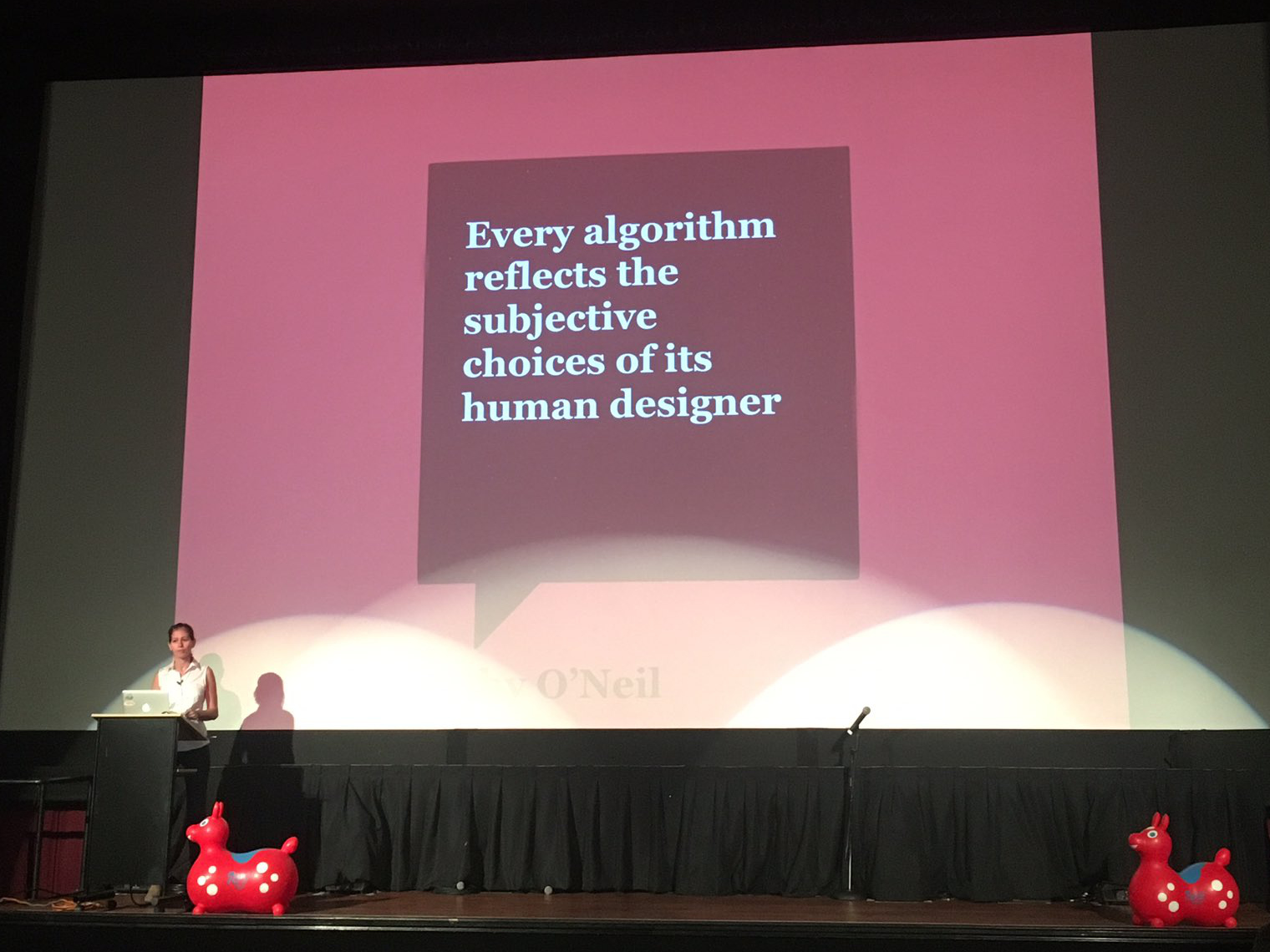
How did he ended up being the unlucky passenger? An algorithm that looked at the cost of the ticket, time checking in, was he part of a rewards system, and more. That algorithm decided that Dr. Dao was one of the least valuable customers on the flight at the time. Does this mean it was a bad algorithm? Cathy O’Neil says: "every algorithm reflects the subjective choices of its human designer".
When asked for advice on finding a place to work, the first question I ask the person is: what do you value?
I get that question so often, that I wrote my values up on my website. Asking and teasing out the “why” questions can be challenging. It requires patience and inner reflection but if done properly, it can be a guiding light throughout your career and life. At Blackmill, we are driven by our purpose and values because life is too short to work in negative environments. As a leader you should work on nurturing a team culture that is healthy and supportive.
So let me ask you again: what do you value? what choices will you make?